Treatment with Cancer Vaccines
Therapeutic vaccines use cancer cells that have been attenuated (weakened) or tumor antigens (sometimes with adjuvants). This type of treatment is called active specific immunotherapy. Note that this is different from preventative vaccines like Gardasil, which is given to fight human papillomavirus that increases the likelihood of cancer. Therapeutic vaccines are given to patients with cancer in an attempt to stop the growth of tumors.
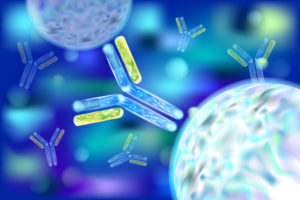
Monoclonal antibodies are now a mainstream part of the oncologist’s arsenal against cancer. Although they are not vaccines, monoclonal antibodies use the immune system to fight cancer cells in a similar manner. In cancer vaccine therapy, an injected antigen stimulates the body’s B cells to produce antibodies against the tumor cells, while in monoclonal antibody therapy, the antibodies that would be produced by B cells are injected directly into the patient. The same or similar antibodies reach the tumor cell, but they are produced outside the patient’s body rather than by the patient’s own cells.
The antibodies are instead produced in cell cultures of B cells that have been stimulated by the tumor antigen. The antigen is first injected into a human or some other vertebrate several times, and the B cells that make antibodies against it are removed. The antibody-producing B cells are then fused with cancerous B cells that have lost the ability to produce antibodies. The result is multiple lines of cells that produce mass quantities of antibodies against the antigen of interest. The various cell lines are tested, and the one that produces the antibody that binds to the antigen best is used to produce the antibodies that are ultimately injected as monoclonal antibody therapy.
Adjuvants
Adjuvants are biochemicals used with vaccines in general (not just anti-cancer vaccines) to enhance the effectiveness of the vaccine. Even decades ago vaccines against diphtheria included aluminum salts. Anti-cancer vaccines may include these type of adjuvant, including lipids and emulsions that keep the vaccine in place. The other type of adjuvant in cancer vaccines are immunostimulants.
Development excitement
Therapeutic vaccines approved include checkpoint blockade modulators that have been approved and two CAR-T cell immunotherapies now in use. The new mRNA (messenger RNA) vaccines and their success in battling the COVID-19 coronavirus has increased interest in that type of vaccine for treatment of other diseases including cancer.
Combination Therapy with Vaccines
If cancer vaccines prove viable, there is a good chance they will find use in combination therapy programs with surgery, radiation, and/or conventional chemotherapy. Early studies suggest that patients treated with a cancer vaccine before other therapies have better chances.
It appears that the introduction of a vaccine to the body starts an immune response and activation of the immune system. Radiotherapy and some chemotherapy can increase cancer cells’ susceptibility to T-cells, so the body is better able to stop tumor growth.
 The strategies used for preventative vaccinations against infectious diseases like influenza and the measles won’t necessarily be appropriate for therapeutic cancer vaccination. Cancer usually takes a toll on a person’s immune system, so a vaccine won’t produce the same kind of response. Further, the antigens produced by cancer differ from the antigens produced by other infectious diseases in that they are self-antigens characteristic of autoimmune diseases. The immune system doesn’t recognize these as foreign threats and T-cells are not activated. Self-antigens are part of the reason it is so hard to treat lupus and AIDS. For this reason, scientists may have to develop methods to specifically stimulate the immune system. Claims of stimulation of the immune system has been a staple of quack remedies, but serious scientists are looking into methods to aid vaccine-assisted immunotherapy for cancer. Proposed methods include stimulation of specific T-cells and strategies to block immune regulation.
References
https://www.frontiersin.org/articles/10.3389/fimmu.2020.615240/full
https://www.cancer.gov/about-cancer/treatment/types/immunotherapy/cancer-treatment-vaccines
https://www.criver.com/eureka/cancer-vaccines-and-adjuvants
https://www.nature.com/articles/s41541-019-0103-y
https://www.ncbi.nlm.nih.gov/books/NBK12480/